Showing posts with label Organizational Effecttiveness. Show all posts

Sunday, September 2, 2012

Learn The Signs of CEO and Small Business Failure

Experts say leadership failure has many signs but they have narrowed the cause to a few that stand out. Few site competence, or knowledge, or lack of experience. When Claudio Fernando-Araoz, head of research for the executive recruitment firm Egon Zehnder International, looked at CEOs who had succeeded and those who had failed, he found the same pattern in America, Germany and Japan: those who failed were hired on the basis of their drive, IQ, and business expertise – but fired for lack of emotional intelligence. They simply could not win over, or sometimes even just get along with, their board of directors, or their direct reports, or others on whom their own success depended.”

In 1999, CEO consultant and advisor RamCharan and Fortune’s Geoffrey Colvin studied over 40 failed CEOs from Fortune 500 companies to see what went wrong. They identified the fatal flaw of these CEOs as execution. But the reason for the execution failure was even simpler and more basic. The problem was with people, specifically their inability in not having the right person in the right job. In some case they held on to some people too long, in other cases they were unable to coach them in the desired direction.

In their Fortune article, Charan and Colvin explained that unsuccessful CEOs lacked emotional strength when it came down to personnel decisions. In short, the fatal flaw of “failure to execute” was due to bad personnel decisions.

Ronald Riggio, the Henry Kravis professor of leadership and organizationqal Psychology at Claremont McKenna College, and author of “The Clueless Leader,” thinks leaders in dysfunctional organizations are simply out of touch with how bad things are. He compares them to Michael Scott from the TV show “The Office,” who simply doesn’t realize how bad thing are or simply doesn’t care. Riggio recalls discussing with the president of one organization the possibility of an employee survey to try to get a handle on how disgruntled employees had become. “Why would we want to do that?” was the clueless response.

In their book, “Why CEOs Fail: The 11 Behaviors That Can Derail Your Climb To The Top And How To Manage Them, “ David Dotlich, a former Honeywell executive and Peter Cairo offer 11 cogent reasons why CEOs fail, most of which have to do with hubris, ego and a lack of emotional intelligence. They describe the most common characteristics of derailed top executives and how you can avoid them:

§ Arrogance— you think that you’re right, and everyone else is wrong.

§ Melodrama— you need to be the center of attention.

§ Volatility— you’re subject to mood swings.

§ Excessive Caution— you’re afraid to make decisions.

§ Habitual Distrust— you focus on the negatives.

§ Aloofness — you’re disengaged and disconnected.

§ Mischievousness— you believe that rules are made to be broken.

§ Eccentricity— you try to be different just for the sake of it.

§ Passive Resistance— what you say is not what you really believe.

§ Perfectionism— you get the little things right and the big things wrong.

§ Eagerness to Please— you try to win the popularity contest.

There are no universal ways to prevent failures, except perhaps to be alert for the warning signs. In today’s culture some executives are larger than life and expected to be perfect. Few like to admit they have flaws—even when those around them can plainly see their flaws.

Candid feedback is seen as helpful and a corrective, but who can provide this? Not employees or board members. A confidante, mentor or a trusted coach can help. But in today’s high-pressure environment, leaders need someone they can trust to tell the truth about their behavior. This is where an outside professional executive coach can help leaders reduce or eliminate blind spots and be open to constructive feedback, not only reducing the likelihood of failure, and premature burnout, but also provide an atmosphere in which the executive can express fears, failures and dreams. via chiefexecutive.net


Tuesday, May 8, 2012

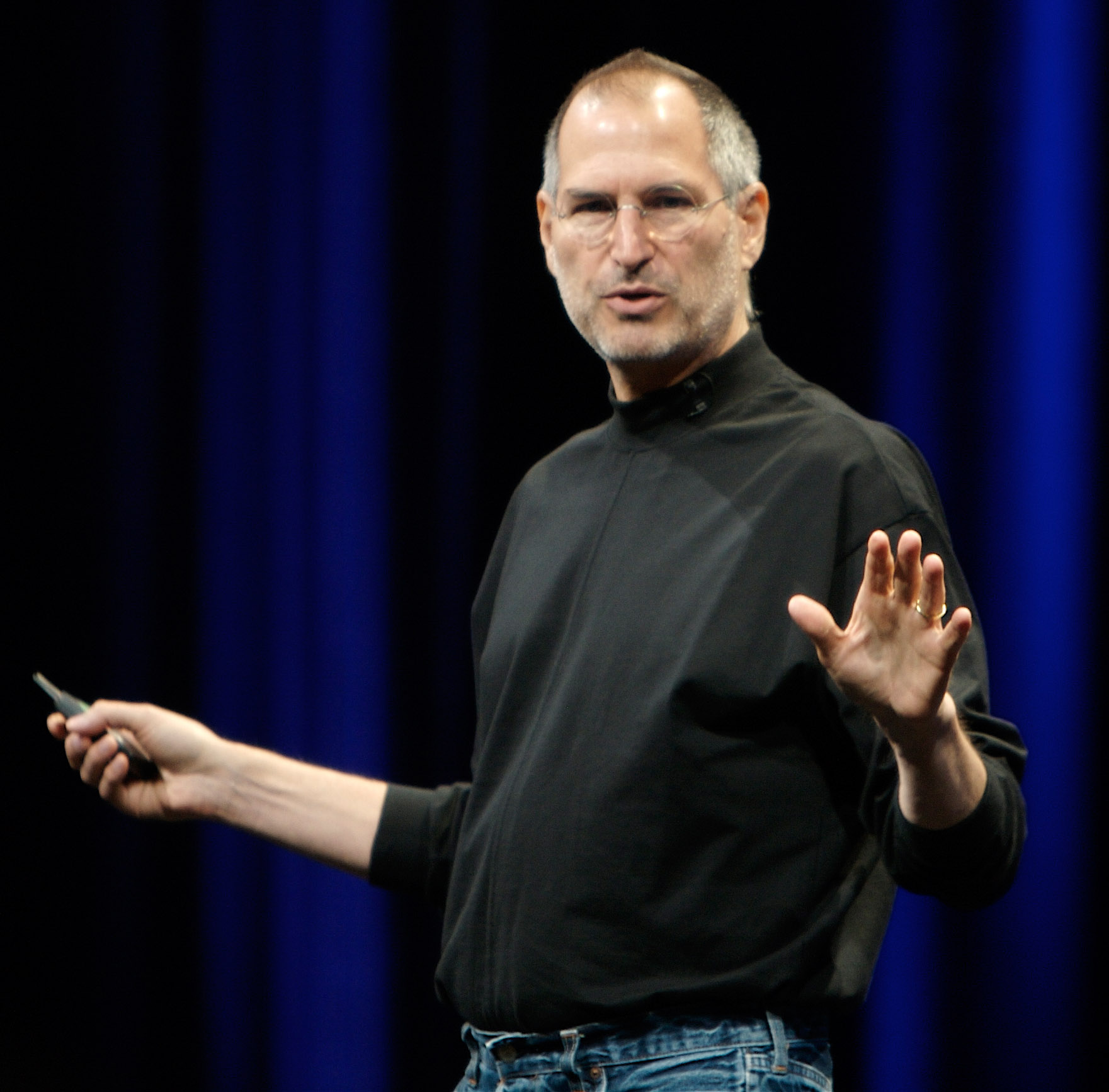
Steve Jobs: A Genius, Yes; A Role Model for the Rest of Us, No Way - Scientific American

I happened upon this article this morning in Scientific American on Steve Jobs and Leadership. In stating the obvious I am a fan of Mr. Jobs. However, while there are certainly aspects of his life to emulate, there are many others to denounce. For example, consider emphatic leadership. This is not an attempt to demoralize a gifted man. For turning around a business or career depends on which you choose. Jim Woods


http://upload.wikimedia.org/wikipedia/commons/e/e5/Steve_Jobs_WWDC07.jpg

The nearly three weeks since Steve Jobs’s death has been like an extended tribute to the first global head of state. The memorial ceremonies worldwide, the special commemorative issues and, today, the release of Walter Isaacson’s Steve Jobs, all bear testament to the Apple founder’s legacy. Jobs deserved it. As Isaacson pointed out on CBS’s 60 Minutes last night, Jobs transformed personal computers, telephones, even retail stores, among others—and he would have probably taken on television, if he had lived long enough.

Many heads of state assuredly do not merit such eulogies. Gaddafi is dead. And when the Turkmens turned out to mourn Saparmurat Atayevich Niyazov in 2006, they were probably secretly celebrating at least the recovery of the month of January, as Niyazov had renamed the first month of the year after his personal honorific, Türkmenbaşy.

One thread among the encomiums suggests that the world would be a better place if we just had more Steve Jobs in high places. Consider this from Thomas Friedman: “The melancholy over Steve Jobs’s passing is not just about the loss of the inventor of so many products we enjoy. It is also about the loss of someone who personified so many of the leadership traits we know are missing from our national politics.”

It would be unfortunate if the remembrance of Jobs spawns a legion of Steve wannabes. Jobs, in geekspeak, was an “N of 1.” Jobs’s perfectionism and design sense helped establish Apple’s signature “iBrands,” but these traits also transcended, to some extent,  a toxic personality that could have served as a model for the Kevin Spacey character in the movie “Horrible Bosses.” In the film, Dave Harken implies that a promotion awaits one of his employees but ends up awarding it to himself. The Jobs equivalent: stiffing early Apple employees out of stock options when the company first went public. The guy was a…

In the weeks since his death, Jobs has been compared to Einstein and Edison. Maybe so. But the problem with using his interpersonal style as a management role model is that the rest of us, to parrot Apple advertising, will assuredly blow it. In business, the control freak boss—the emblematic Jobs model—is a recipe for unintentionally delivering your best employees as new hires to your closest competitors. Talk to us about leveraging your capabilities.

Millions of people have to manage others, and this challenge doesn’t necessarily bring out the best in us. A 2005 article by two psychologists from the University of Surrey, “Disordered Personalities at Work,” found that senior British executives were more likely to demonstrate histrionic personality disorder (grandiosity and lack of empathy among other traits) than criminal psychiatric patients at Broadmoor Special Hospital in Berkshire, England, and they were equally likely to show narcissistic (perfectionism and a dictatorial bent) and compulsive tendencies. Is it that this type of person is attracted to the job or the workplace encourages this type of behavior? Who knows? But entreating subordinates to “insanely great” levels of performance, to quote Jobs’s hyperbolic rhetoric, is more likely to initiate a collective bargaining drive than produce the next iPad.

Even Jobs may have been at his best when he left behind the persona of the old Steve. New Yorker writer James Surowiecki and author of The Wisdom of Crowds: Why the Many Are Smarter Than the Few and How Collective Wisdom Shapes Business, Economies, Societies and Nations, noted in that magazine how Jobs loosened up in recent years on his insistence on totally closed architectures. The old Steve might have forbidden MP3s on iPods and apps for iPhones and iPads. Giving up a modicum of control eventually propelled the company to heights it had never before experienced—and cemented Jobs’s legacy in the most histrionic terms imaginable.

via blogs.scientificamerican.com

Consulting, Speaking & Coaching. Driving Growth through Innovation  

Innothink Group is a strategic management and innovation consultancy. Where many consulting firms are reluctant to bear risks or tie their rewards to project outcomes, we decided to build a better model. We align our success with yours. We’re outcome obsessed, outcome paid, putting over a third of our fees at risk subject o hitting predetermined milestones. More than a guarantee we wanted from the outset to create true partnerships. 

For speaking, coaching or consulting inquiries contact: 

CEO Jim Woods

+1 719- 649-4118