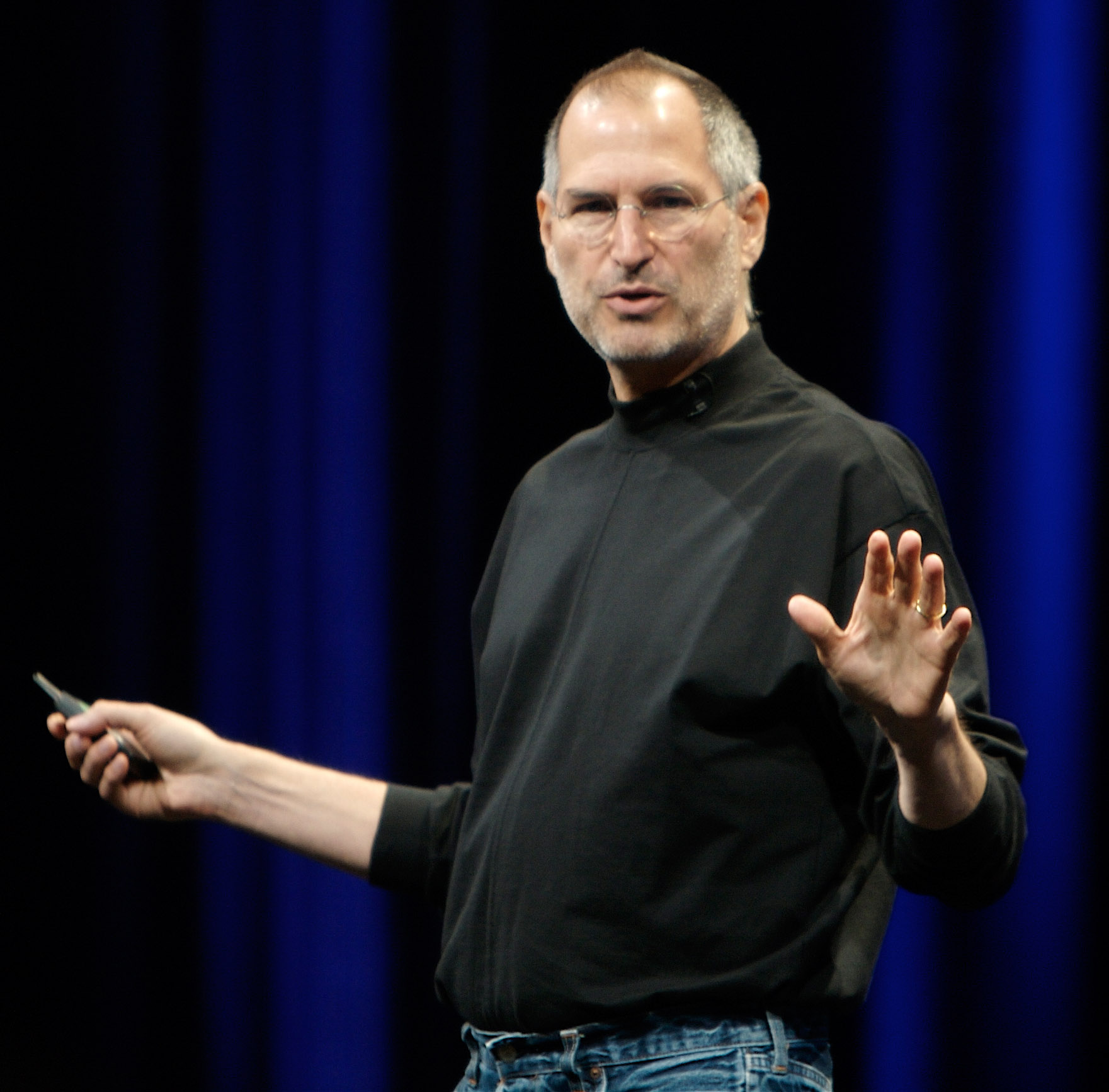
I happened upon this article this morning in Scientific American on Steve Jobs and Leadership. In stating the obvious I am a fan of Mr. Jobs. However, while there are certainly aspects of his life to emulate, there are many others to denounce. For example, consider emphatic leadership. This is not an attempt to demoralize a gifted man. For turning around a business or career depends on which you choose. Jim Woods
The nearly three weeks since Steve Jobs’s death has been like an extended tribute to the first global head of state. The memorial ceremonies worldwide, the special commemorative issues and, today, the release of Walter Isaacson’s Steve Jobs, all bear testament to the Apple founder’s legacy. Jobs deserved it. As Isaacson pointed out on CBS’s 60 Minutes last night, Jobs transformed personal computers, telephones, even retail stores, among others—and he would have probably taken on television, if he had lived long enough.
Many heads of state assuredly do not merit such eulogies. Gaddafi is dead. And when the Turkmens turned out to mourn Saparmurat Atayevich Niyazov in 2006, they were probably secretly celebrating at least the recovery of the month of January, as Niyazov had renamed the first month of the year after his personal honorific, Türkmenbaşy.
One thread among the encomiums suggests that the world would be a better place if we just had more Steve Jobs in high places. Consider this from Thomas Friedman: “The melancholy over Steve Jobs’s passing is not just about the loss of the inventor of so many products we enjoy. It is also about the loss of someone who personified so many of the leadership traits we know are missing from our national politics.”
It would be unfortunate if the remembrance of Jobs spawns a legion of Steve wannabes. Jobs, in geekspeak, was an “N of 1.” Jobs’s perfectionism and design sense helped establish Apple’s signature “iBrands,” but these traits also transcended, to some extent, a toxic personality that could have served as a model for the Kevin Spacey character in the movie “Horrible Bosses.” In the film, Dave Harken implies that a promotion awaits one of his employees but ends up awarding it to himself. The Jobs equivalent: stiffing early Apple employees out of stock options when the company first went public. The guy was a…
In the weeks since his death, Jobs has been compared to Einstein and Edison. Maybe so. But the problem with using his interpersonal style as a management role model is that the rest of us, to parrot Apple advertising, will assuredly blow it. In business, the control freak boss—the emblematic Jobs model—is a recipe for unintentionally delivering your best employees as new hires to your closest competitors. Talk to us about leveraging your capabilities.
Millions of people have to manage others, and this challenge doesn’t necessarily bring out the best in us. A 2005 article by two psychologists from the University of Surrey, “Disordered Personalities at Work,” found that senior British executives were more likely to demonstrate histrionic personality disorder (grandiosity and lack of empathy among other traits) than criminal psychiatric patients at Broadmoor Special Hospital in Berkshire, England, and they were equally likely to show narcissistic (perfectionism and a dictatorial bent) and compulsive tendencies. Is it that this type of person is attracted to the job or the workplace encourages this type of behavior? Who knows? But entreating subordinates to “insanely great” levels of performance, to quote Jobs’s hyperbolic rhetoric, is more likely to initiate a collective bargaining drive than produce the next iPad.
Even Jobs may have been at his best when he left behind the persona of the old Steve. New Yorker writer James Surowiecki and author of The Wisdom of Crowds: Why the Many Are Smarter Than the Few and How Collective Wisdom Shapes Business, Economies, Societies and Nations, noted in that magazine how Jobs loosened up in recent years on his insistence on totally closed architectures. The old Steve might have forbidden MP3s on iPods and apps for iPhones and iPads. Giving up a modicum of control eventually propelled the company to heights it had never before experienced—and cemented Jobs’s legacy in the most histrionic terms imaginable.
via blogs.scientificamerican.com
Consulting, Speaking & Coaching. Driving Growth through Innovation
Innothink Group is a strategic management and innovation consultancy. Where many consulting firms are reluctant to bear risks or tie their rewards to project outcomes, we decided to build a better model. We align our success with yours. We’re outcome obsessed, outcome paid, putting over a third of our fees at risk subject o hitting predetermined milestones. More than a guarantee we wanted from the outset to create true partnerships.
For speaking, coaching or consulting inquiries contact:
+1 719- 649-4118
Tuesday, May 8, 2012
Steve Jobs: A Genius, Yes; A Role Model for the Rest of Us, No Way - Scientific American


Tuesday, April 3, 2012
James Murdoch to Quit as BSkyB Chairman
By PAUL SONNE
LONDON— James Murdoch stepped down as chairman of U.K. pay-TV company British Sky Broadcasting Group BSY.LN -0.81% PLC, as News Corp. NWSA +0.10% aimed to shield the prized asset from a scandal over illegal voice-mail interception and alleged bribery of police by the parent's British newspaper stable.
News Corp. Deputy Chief Operating Officer James Murdoch is stepping down as chairman of U.K. pay-TV giant British Sky Broadcasting Group, Bruce Orwall reports on the Markets Hub. Photo: Getty Images.
Mr. Murdoch, who served as chief executive of BSkyB from 2003 to 2007 before becoming News Corp.'s head of Europe and Asia, ceded the chairmanship of the British broadcaster to fellow board member Nicholas Ferguson on Tuesday. Mr. Murdoch will maintain a seat on the board and remain deputy chief operating officer of News Corp., which owns 39.1% of BSkyB.
Bloomberg News
James Murdoch, deputy chief operating officer of News Corp.
The resignation was the latest in a string of moves that have steadily eroded the turf and responsibility of Mr. Murdoch. In February he relinquished oversight of the U.K. newspaper unit, News International, which has been at the center of the storm over reporting tactics.
Until last year, he was widely seen as the likely successor to his 81-year-old father, News Corp. CEO Rupert Murdoch. However, James Murdoch's future has been clouded by his handling of the phone-hacking affair, a job he took over in 2007 when he moved to News Corp. from BSkyB, inheriting the task of managing the scandal while it was at a lull.
The scandal has risked contaminating News Corp.'s lucrative TV operation, possibly endangering BSkyB's broadcasting license.
Media Scion in Spotlight
See a timeline of key dates in James Murdoch's career.
"As attention continues to be paid to past events at News International, I am determined that the interests of BSkyB should not be undermined by matters outside the scope of this company," James Murdoch said in a prepared statement. "I am aware that my role as chairman could become a lightning rod for BSkyB and I believe that my resignation will help to ensure that there is no false connection with events at a separate organization."
The success of the U.K. pay-TV operator was at the heart of the argument that James Murdoch would be a worthy steward for News Corp. in the future. The 39-year-old Mr. Murdoch helped build BSkyB into a dominant force in U.K. broadcasting.
By moving him out as BSkyB's chairman but leaving him on the board, the Murdochs and News Corp. are attempting to navigate a tricky course. The company is trying to remove Mr. Murdoch as a flash point for criticism of BSkyB, the biggest pay-TV company in the U.K., with more than 10 million subscribers. But they also are seeking to preserve the younger his authority as deputy operating chief, the heart of which centers on News Corp.'s international TV operations.
News Corp. owns The Wall Street Journal.
Critics called Mr. Murdoch's resignation inevitable but described it as too little, too late.
Alan MacDougall, managing director of Pensions & Investment Research Consultants Ltd., a U.K. shareholder lobbying group, said Mr. Murdoch should leave the board entirely. "In reality the company should have appointed an independent chair last summer, to create a clear separation between the management of the business and the scandal at News Corp.," he said in a prepared statement. "Failure to act more quickly has resulted in self-inflicted reputational damage."
The phone-hacking saga has brought the closure of the company's 168-year-old News of the World tabloid, three criminal investigations in Britain, the resignation of top executives and the July collapse of News Corp.'s multibillion-dollar bid to take full control of BSkyB.
Within the next few weeks, a U.K. parliamentary committee is expected to release a final report on News Corp.'s handling of the phone-hacking affair. One issue in the report is expected to be whether the company, including James Murdoch, misled lawmakers about the phone-hacking problem in years past. In one high-profile dust-up, he has been battling with two former underlings over whether in 2008 he knew the full implications of authorizing a large, secret settlement in an early phone-hacking lawsuit.
The U.K. communications regulator, Ofcom, has begun keeping close tabs on developments to evaluate whether News Corp. is a "fit and proper" owner for BSkyB. The regulator can revoke a broadcasting license if an owner doesn't meet the loosely defined classification, which takes into account criminality, the propriety of directors and other behavior. Ofcom is unlikely to act before the conclusion of the criminal investigations.
British police first made arrests related to voice-mail interception at the tabloid News of the World in 2006. The long-simmering issue became a full-blown scandal last July amid revelations that the paper hacked into the voice-mail box of a murdered British girl. Since then, police have arrested dozens of current and former News International employees on suspicion of phone hacking, bribing police and conspiracy to pervert the course of justice. No one has been charged. News Corp. has apologized for the wrongdoing and settled over 50 lawsuits related to phone hacking. The company says it is cooperating with the police probes.
Rupert Murdoch and News Corp. Chief Operating Officer Chase Carey said Tuesday that they were grateful for James Murdoch's leadership of BSkyB. "He has played a major role in propelling the company into the market-leading position it enjoys today—and in the process has been instrumental in creating substantial value for News Corporation shareholders," the pair said in a written statement.
In March 2011, two months after British police reopened a dormant probe into phone hacking at the News of the World, News Corp. announced that the younger Mr. Murdoch would move to New York to become News Corp.'s deputy operating chief. At the time, the company said he would continue to oversee operations in Europe and Asia, but he stopped overseeing News International in February.
The appointment to deputy operating chief was seen as a promotion at the time. But people familiar with the matter later described it as an attempt to rein in the younger Mr. Murdoch, who increasingly was running his own show in London, leading to tensions with News Corp.'s upper management in New York.
This year he has left the board of pharmaceutical company GlaxoSmithKline GSK -0.26% PLC and the auction house Sotheby's, BID -0.80% the only corporate boards on which he had been serving, besides those of News Corp. and BSkyB. As a consequence of giving up oversight of News International, he has left several boards related to the company's U.K. newspapers.
—Dana Cimilluca
contributed to this article.Write to Paul Sonne at paul.sonne@wsj.com


Innovation Tip: Domino’s Tells Customers They’re Not Always Right
(Image Credit: Graham Barclay/Bloomberg via Getty Images)
Domino’s is saying “no,” literally, when it comes to the whims of picky pizza eaters.
The popular pizza delivery company says it will no longer make changes to its line of artisan pizzas for individual customers and is announcing it in a bold new TV ad campaign that says “No!” to customers.
The national ad campaign will launch Thursday and aim to send the message that after 50 years in the pizza business, its chefs got this recipe right, the company said.
“It comes from confidence in our artisan pizza recipe,” Domino’s spokesman Chris Brandon told ABCNews.com. “What makes this unique is that these pizzas are created to a specific recipe. Our chefs created the artisan recipes so they’re preset and that’s what this whole campaign is all about.”
At the center of the “No” campaign is the Ann Arbor, Mich.-based chain’s new Chicken & Bacon Carbonara Artisan pizza, the latest in the artisan pie line they debuted in the fall, part of an effort to expand its offerings and upgrade its image as a maker of high-quality pizza. More than 80 percent of the items on the Domino’s menu are new since 2008, Brandon said.
The company completed a redesign in 201o of its 50-year-old pizza with a new crust, new cheese and new sauce based on customer feedback that the product could be better. “We completely invented it from the crust up,” Brandon said of the 2010 effort. “After the new pizza launch, we looked at the whole menu and how it could be improved and added to and that’s what we’ve done since.”
Customers in the chain’s 9,541 franchised and company-owned stores throughout the United States will still be able to order their regular pizzas any way they want, but the artisan will come prepared. A voiceover in the new ad, created by ad agency Crispin Porter + Bogusky, notes that the company spent years “perfecting the balance on our artisan crust toppings.”
“There’s more than 30 million ways to make a single Domino’s pizza,” Brandon said. “We’ve always said yes to those but our artisan pizza, what makes it unique, is that it was designed to be a recipe in itself.”
The whole payoff of the campaign is that ‘no’ is the new “yes,’” he said. “What we’re trying to get across is that what we want our consumers to get the best experience possibly by either trying something new,” he added.
Brandon acknowledged the company will make exceptions and remove toppings for people with food allergies, but said that is it.
“If somebody is allergic or really needs or wants a product removed, we’ll remove it,” he said. “We’ll accommodate that for sure but we won’t be adding anything.”
Upending the long-held customer service mantra that the customer is always right is a bold move for the company that has had success with the “Oh Yes We Did” tagline it introduced with the 2010 pizza reinvention.
In its last fiscal year, Domino’s Pizza Inc. reported its full-year earnings rose 20 percent to $105.4 million, and its annual revenue increased 5 percent to $1.65 billion from the last fiscal year.
“We’ll see,” Brandon said the potential for customer backlash from the “No!” ads. “It’s definitely a unique campaign but one that people who have been following Domino’s have seen that we’ve had a very honest and transparent way of talking with customers so I think they’ll understand what we mean with this campaign.”
The Associated Press contributed to this report.